Publication Ethics and Policies – Computational Intelligence and Machine Learning Journal
The Computational Intelligence and Machine Learning (CIML) journal is committed to maintaining the highest standards of ethical conduct in scholarly publishing.
This statement outlines the responsibilities of authors, editors, reviewers and the publisher to ensure integrity, transparency and accountability in the publication process.
Authors must ensure that submitted manuscripts are original, free from plagiarism and have not been published elsewhere.
Authorship:
Authorship should accurately reflect contributions. All listed authors must have made a significant contribution to the research and approved the final manuscript.
Data Integrity:
Authors must present accurate data and results. Fabrication, falsification or selective reporting is strictly prohibited.
Disclosure:
Authors must disclose all sources of funding, potential conflicts of interest and relevant ethical approvals (for studies involving humans or animals).
Corrections & Retractions:
Authors are obliged to cooperate with editors in correcting errors or retracting work if misconduct is identified.
● Copyright is a type of intellectual property which protects certain sorts of original creative work, including academic articles. Copyright allows the creator of a work to decide whether, and under what conditions, their work may be used, published and distributed by others. As such, it governs how others can use, publish and distribute articles.
● Understanding your copyright options as an author is becoming ever more important, especially with the growth of open access publishing.
Copyrights At Computational Intelligence and Machine Learning
As a user, you have the right to request To publish an article and make it available, we need publishing rights from you for that work. We therefore ask authors for publishing in Computational Intelligence and Machine Learning to sign an author contract which grants us the necessary publishing rights. This will be after your manuscript has been through the peer-review process, been accepted and moves into publishing. Our Publication team will then send you an email with all the details.
To protect the rights and interests of both parties, Computational Intelligence and Machine Learning requires an exclusive licence that clearly stipulates our rights and the specific rights retained by authors. We ask the corresponding author to grant this exclusive licence to Computational Intelligence and Machine Learning on behalf of all authors. Computational Intelligence and Machine Learning agrees to publish the manuscript and has the right:
To publish, reproduce, distribute, display and store the manuscript
To translate the manuscript into other languages
To create adaptations, reprints, and create summaries, extracts and/or, abstracts of the manuscript
To create any other derivative work(s) based on the manuscript
To include electronic links from the manuscript to third party material
To license any third party to do any or all of the above
To authorize Computational Intelligence and Machine Learning to take legal proceedings in the copyright owner's name and on the author(s)' behalf if the author(s)' believe that a third party is infringing or is likely to infringe copyright in the manuscript.
Copyrights Assignment
In our standard author contract, you transfer – or "assign" – copyright to us as the owner and publisher of the journal .
Assigning the copyright enables us to:
Effectively manage, publish and make your work available to the academic community and beyond.
Act as stewards of your work as it appears in the scholarly record.
Handle reuse requests on your behalf.
Take action when appropriate where your article has been infringed or plagiarized.
Increase visibility of your work through third parties.
Copyright Notice
Authors publishing in Computational Intelligence and Machine Learning (CIML) retain copyright of their work.
License: All articles are published under the Creative Commons Attribution 4.0 International License (CC BY-NC 4.0).
This license permits unrestricted use, distribution and reproduction in any medium, provided the original work is properly cited.
Author Rights: Authors may freely share, adapt and build upon their work for any purpose,
including commercial use, as long as appropriate credit is given to the original publication in CIML.
Journal Rights: By submitting a manuscript, authors grant CIML the right of first publication and the non-exclusive license to archive and disseminate the work in print and electronic formats
Open Access Policy: All published content is immediately and permanently available online without charge to readers, ensuring maximum visibility and impact.
Restrictions: Users must not misrepresent the work or imply endorsement by the authors or the journal.
Authors are allowed to use their own articles for non-commercial purposes without seeking permission from Computational Intelligence and Machine Learning. For commercial use we need to know about it. Authors retain the following right to:
Post a PDF of their article to fellow researchers for educational purposes only;
Make a reasonable number of copies for personal or non-commercial use. This includes the contributor's own teaching purposes;
Republish part or all of the article in a book or other publication edited by the author (except for multiple contributions in the same book or publication);
Use the illustrations and research data in their own future works;
Use the article in course packs in the authors institution. This does not apply if a commercial charge is made for the compilation or training programme;
Use the work for further research and presentations at meetings;
To authorize Computational Intelligence and Machine Learning to take legal proceedings in the copyright owner's name and on the authors's name. Reuse all or part of the published manuscript in other works for non-commercial purposes, the original publication in the Computational Intelligence and Machine Learning must be approved through a note or citation in a format acceptable to Computational Intelligence and Machine Learning.
Open Access Articles
Computational Intelligence and Machine Learning (CIML ) is committed to real and immediate open access for published articles. All of the CIML articles are free to access immediately from the date of publication. There are no charge for any reader to download articles
Information about all funding sources pertaining to the conducted work should be presented in a distinct section titled 'Funding.' This section should follow the 'Acknowledgements' part.
The following guidelines are to be adhered to:
The sentence should commence with: 'This work was supported by ...'
The complete official name of the funding agency should be provided, such as 'Technoarete Research and Development Association,' not abbreviated as 'TRDA.'
Agencies should be delineated by a semi-colon, with 'and' preceding the last funding agency.
Any specific role played by a sponsor should be explicitly outlined in the acknowledgements section. This includes their involvement in writing, study design, data collection, analysis, or interpretation.
In the abstract, if funding has been secured for the study, a 'Funding:' heading should be added at the end, enumerating the companies or institutes that have provided financial support. For instance, Funding: ARC.
Authors are obligated to disclose any actual or potential conflict of interest, encompassing financial, personal, or other relationships that could unduly influence or be perceived to influence their work. This disclosure is required at the time of manuscript submission and is reiterated during the submission of the Author Agreement Form. The second declaration in the Author Agreement Form serves two purposes: i) authors can rectify any inadvertent omissions in the initial conflict of interest declaration made during manuscript submission, and ii) if any conflicts arise between manuscript submission and the final decision, authors can declare them in the agreement for appropriate action.
The corresponding author bears the responsibility of gathering potential conflicts of interest from each author and incorporating the comprehensive list into the manuscript before submitting it for publication.
Editors of all journals published by CIML are committed to upholding the highest standards in manuscript evaluation and preserving the integrity of the Journal. Editors must disclose any potential conflicts of interest to CIML Journals at the time of enrollment, as well as promptly upon the development of any conflicts after enrollment. This disclosure is also required separately for each manuscript undergoing editorial review. If an editor submits a manuscript for publication, the handling editor's identity will be known only to the Editor-in-Chief and the Journal editorial staff.
When a manuscript is submitted by an author from the same institution as one of the editors, it will be assigned to another editor not affiliated with that institution. Similarly, if an author has a familial, personal, or professional relationship with an editor, the manuscript will be assigned to a different editor.
All peer reviewers must declare any conflicts of interest in the manuscript review form as the initial step in the manuscript evaluation process. If a material potential conflict, whether financial or otherwise, exists, reviewers are encouraged to recuse themselves from the review process. They should submit the review form to the Editor-in-Chief, listing the conflict of interest. Importantly, the reviewer's declaration of a potential conflict does not automatically invalidate the review of the manuscript.
● Authors should present their works in accordance with the journal's standards and title.
● Authors should ensure that they have written their original works/research. Their works/researches should also provide accurate data, underlying other's references.
● Authors are responsible for their works' accuracy.
Note 1: Publishing an article is not known as acceptance of its contents by journal.
● Duplicate submission is not accepted. In other words, none of the article's parts should not carry on reviewing or publishing elsewhere.
● Overlapping publication, where the author uses his/her previous findings or published date with changes, is rejected.
● Authors are asked to have authors' permission for an accurate citation. When using one's direct speech, a quotation mark (" ") is necessary.
● Corresponding authors should ensure that the complete information of all involved authors in the article.
Note 2: Do not write the statement of "Gift Authorship" and do not omit the statement of "Ghost Authorship".
● Corresponding author is responsible for the priorities of co-authors after their approval.
● Paper submission means that all of the authors have satisfied whole financial and local supports and have introduced them.
● Author(s) is/are responsible for any fault or inaccuracy of the article and in this case, the journal's authorities should be informed immediately.
● Author(s) is/are asked to provide and reserve raw data one year after publication, in order to respond to the journal audiences' questions.
Author(s) should avoid the research and publication misconduct. If some cases of research and publication misconduct occur within each step of submission, review, edition or publication, journals have the right to legal action. The cases are listed as below:
● Fabrication : Fabrication is the practice of inventing data or results and reporting them in the research. Both of these misconducts are fraudulent and seriously alter the integrity of research. Therefore, articles must be written based on original data and use of falsified or fabricated data is strongly prohibited.
● Falsification : Falsification is the practice of omitting or altering research materials, equipment, data, or processes in such a way that the results of the research are no longer accurately reflected in the research record.
● Plagiarism : Plagiarism is the act of taking someone else's writing, conversation, idea, claims or even citations without any acknowledgment or explanation of the work producer or speaker.
● Wrongful Appropriation : Wrongful appropriation occurs when author(s) benefits another person's efforts and after a little change and manipulations in the research work, publish it on his/her own definitions
● False Attribution : It represents that a person is the author of a work but she/ he was not involved in the research.
● Qualitative, contextual and scientific study in order to improve articles' quality and content.
● To inform the editor-in-chief when he accepts or rejects the review and introduces an alternative.
● Should not accept the articles which consider the benefits of persons, organizations and companies or personal relationships; also the articles which she/he, own, contributed in its writing or analysis.
● The reviewing must be carried out upon scientific documents and any self, professional, religious and racial opinion is prohibited.
● Accurate review and declaration of the article's strengths and weaknesses through a clear, educational and constructive method.
● Responsibility, accountability, punctuality, interest, ethics adherence and respect to others' rights.
● Not to rewrite or correct the article according to his/her personal interest.
● Be sure of accurate citations. Also reminding the cases which haven't been cited in the related published research.
● Avoid expressing the information and details of articles.
● Reviewers should not benefit new data or contents in favor of/against personal research; even for criticism or discrediting the author(s). The reviewer is not permitted to reveal more details after a reviewed article being published.
● Reviewers are prohibited to deliver an article to another one for reviewing except with permission of the editor-in-chief. Reviewer and co-reviewer's identification should be noted in each article's documents.
● Reviewer shouldn’t contact the author(s). Any contact with the authors should be made through the Journal.
● Trying to report "research and publication misconduct" and submitting the related documents to the editor-in-chief.
● Journal maintenance and quality improvement are the main aims of the editorial board.
● Editorial board should introduce the journal to universities and international communities and publish the articles of other universities and international societies on their priority.
● Editorial board must not have quotas and excess of their personal article publishing.
● Editorial board is responsible for selecting the reviewers as well as accepting or rejecting an article after reviewers' comments.
● Editorial board should be well-known experts with several publications. They ought to be responsible, accountable, truth, adhere to professional ethics and contribute to improving journal aims.
● Editorial board is expected to have a database of suitable reviewers for journals and to update the information regularly.
● Editorial board should try to aggregate qualified moral, experienced and well-known reviewers
● Editorial board should welcome deep and reasonable reviews, and prevent superficial and poor reviews, and deal with one-sided and contemptuous reviews.
● Editorial board should record and archive the whole review's documents as scientific documents and to keep confidentially the reviewers' name.
● Editorial board must inform the final result of the review to the corresponding author immediately.
● Editorial board should keep the article's contents confidential and do not disclose its information to others.
● Editorial board ought to prevent any conflict of interests due to any personal, commercial, academic and financial relations which may impact on accepting and publishing the presented articles.
● Editor-in-chief should check each type of research and publication misconduct which reviewers report seriously.
● If a research and publication misconduct occurs in an article, editor-in-chief should omit it immediately and inform indexing databases or audiences.
● In the case of being a research and publication misconduct, the editorial board is responsible to represent a corrigendum to audiences rapidly.
● Editorial board must benefit of audiences' new ideas in order to improve publication policies, structure and content quality of articles.
● Honesty and transparency is must to become an Editorial Board member, where an Editor should judge every submission equally and transparently.
● Providing the final judgment on the articles assigned within the allotted time with proper reason and clarification should be done by the Editor.
● Editor should remember the policy of fast and effective peer review and further process, therefore, should communicate with the reviewers or authors depending on the stage of article processing in case of any delay.
● Editors will be responsible to convey the expectations of the journal to the reviewers with the review scope, quality and timeliness for an effective, fair and constructive review for the assigned submission.
● If any special issue proposal is submitted to the journal, the assigned Editorial Board member should review the proposal for suitability with the scope of the journal, timeliness and assessing the scope and the importance of the topic.
● Guest Editor can handle a special issue independently while maintaining regular communication with the Editorial Board member.
● Once a proposal has been accepted by the Editorial Board members for creating a special issue, the corresponding guest editors will be responsible for handling and processing of the special issue articles.
Reviewers evaluate article submissions to journals based on the requirements of that journal, predefined criteria, and the quality, completeness and accuracy of the research presented. They provide feedback on the paper, suggest improvements and make a recommendation to the editor about whether to accept, reject or request changes to the article. The ultimate decision always rests with the editor but reviewers play a significant role in determining the outcome.
● Ensure the rigorous standards of the scientific process by taking part in the peer-review system.
● Uphold the integrity of the journal by identifying invalid research, and helping to maintain the quality of the journal.
● Fulfil a sense of obligation to the community and their own area of research.
● Establish relationships with reputable colleagues and their affiliated journals, and increase their opportunities to join an Editorial Board.
● Helps prevent ethical breaches by identifying plagiarism, research fraud, and other issues
through their familiarity with the subject area
● Reciprocate professional courtesy, as authors and reviewers are often interchangeable roles – as reviewer, researchers "repay" the same consideration they receive as authors.
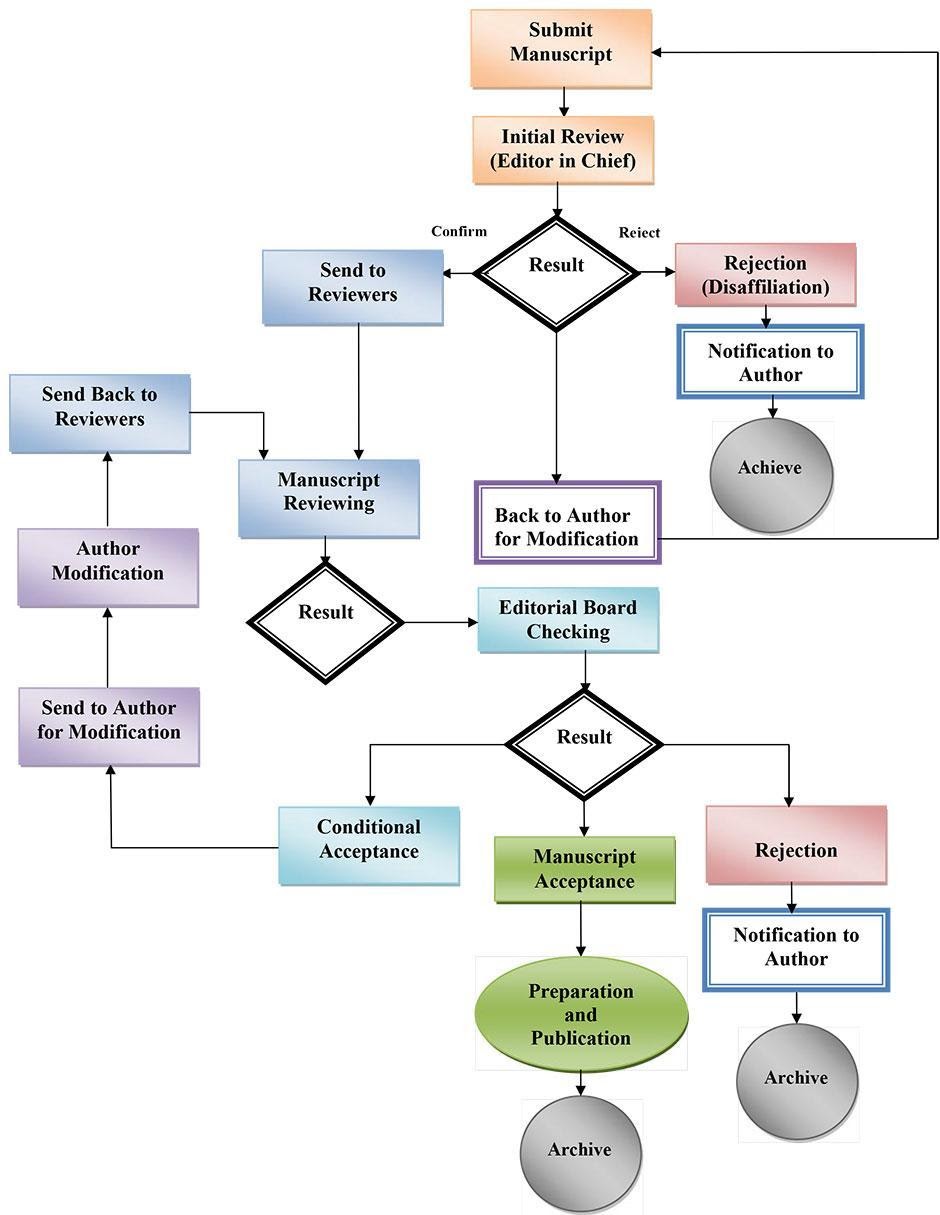
The Computational Intelligence and Machine Learning (CIML) journal employs a rigorous double-blind peer review process to ensure the quality, originality and integrity of all published work.
Both authors and reviewers remain anonymous throughout the evaluation, safeguarding impartiality and fairness
Initial Screening
● All submissions are first reviewed by the editorial office to ensure compliance with journal policies, formatting requirements and ethical standards.
● Manuscripts that do not meet basic criteria (scope, originality, plagiarism check) are returned to authors without external review.
Assignment to Reviewers
● Suitable manuscripts are assigned to at least two independent expert reviewers with relevant subject expertise.
● Reviewers are selected based on their academic qualifications, research experience and absence of conflicts of interest.
Double-Blind Review
● Author anonymity: Manuscripts are stripped of identifying information before being sent to reviewers.
● Reviewer anonymity: Reviewer identities remain confidential and are not disclosed to authors.
● This ensures that evaluation is based solely on scholarly merit, technical soundness and contribution to the field.
Evaluation Criteria
Reviewers assess manuscripts on:
● Originality and novelty of research
● Technical accuracy and methodological rigor
● Clarity of presentation and logical organization
● Relevance to computational intelligence, machine learning and interdisciplinary applications
● Contribution to advancing knowledge and practice in the field
Editorial Decision
● Based on reviewer reports, the editor may decide to:
● Accept the manuscript
● Request minor or major revisions
● Reject the manuscript
● Authors receive constructive feedback to improve their work, even if the manuscript is not accepted.
Revision & Resubmission
● Authors are expected to address reviewer comments thoroughly and resubmit within the specified timeframe.
● Revised manuscripts may be re-evaluated by the same reviewers or additional experts if necessary.
Final Acceptance & Publication
● Once accepted, manuscripts undergo final editorial checks, copyediting and formatting before publication.
● Accepted articles are published online under the journal’s open access policy (CC BY-NC 4.0), ensuring global visibility and accessibility.
Ethical Oversight
● The editorial board follows COPE (Committee on Publication Ethics) guidelines in handling disputes, misconduct or ethical concerns.
● Plagiarism, data fabrication or undisclosed conflicts of interest result in rejection or retraction.
ADVERTISING POLICY
CIML Journal does not publish any advertising or sponsorship opportunity, as a means to provide high value to our readers.
open access
The Computational Intelligence and Machine Learning (CIML) journal is committed to
the principles of open science and unrestricted access to knowledge. All content
published in CIML is freely available online to readers worldwide, without subscription
or access fees.
● Immediate and Free Access: All articles are published under an open access model, ensuring that research findings are accessible to scholars, professionals and the public without financial or technical barriers.
● Creative Commons License: Articles are distributed under the Creative
Commons Attribution 4.0 International License (CC BY-NC 4.0). This permits
users to read, download, copy, distribute, print, search and link to the full texts, as
well as reuse content for any lawful purpose, provided proper attribution is given
to the original work.
● Author Rights: Authors retain copyright of their work while granting CIML the
right of first publication. Authors may freely share and disseminate their articles
across repositories, websites and academic platforms.
● Global Visibility: Open access publication enhances the visibility, reach and
impact of research by making it available to a diverse international audience.
● No Access Fees: Readers are not charged for accessing published content. The
journal ensures equitable dissemination of knowledge across geographic,
economic and institutional boundaries.
By adopting an open access policy, CIML promotes transparency, collaboration and
innovation in computational intelligence and machine learning research. This
approach strengthens the journal’s mission to serve as a distinguished forum for
global research exchange.
One author is assigned as Corresponding Author and acts on behalf of all co-authors and ensures that questions related to the accuracy or integrity of any part of the work are appropriately addressed
The Corresponding Author is responsible for the following requirements:
● Ensuring that all listed authors have approved the manuscript before submission, including the names and order of authors;
● Managing all communication between the Journal and all co-authors, before and after publication*;
● Providing transparency on re-use of material and mention any unpublished material (for example manuscripts in press) included in the manuscript in a cover letter to the Editor;
● Making sure disclosures, declarations and transparency on data statements from all authors are included in the manuscript as appropriate (see above).
Please check the Instructions for Authors of the Journal that you are submitting to for specific instructions regarding contribution statements.In absence of specific instructions and in research fields where it is possible to describe discrete efforts, the journal recommends authors to include contribution statements in the work that specifies the contribution of every author in order to promote transparency. These contributions should be listed at the end of the submission.
*The requirement of managing all communication between the journal and all co-authors during submission and proofing may be delegated to a Contact or Submitting Author. In this case please make sure the Corresponding Author is clearly indicated in the manuscript.
Publication Frequency
Computational Intelligence and Machine Learning is a bi-annual journal, ie the journal is published twice a year (April and October).Computational Intelligence and Machine Learning is a bi-annual journal, meaning that two issues are published yearly. When it comes to submission, reviewing and publication timelines, it takes on average eight weeks between the submission of an article/paper and acceptance (after reviewing), and subsequently, about four weeks between acceptance and publication of the article/paper.
Digital preservation
Technoarete is committed to ensuring long-term accessibility and protection of academic research. We achieve this by updating digital file formats to meet current technology standards and maintaining a proprietary digital archive for preserving and enhancing access to scholarly content.
Plagiarism Policy
The Computational Intelligence and Machine Learning (CIML) journal is committed to upholding the highest standards of academic integrity. Plagiarism in any form is
strictly prohibited and will not be tolerated.
By submitting to CIML, authors affirm that their work is original, properly referenced and prepared in accordance with ethical publishing standards.
This policy safeguards the credibility of the journal and ensures trust within the global research community.
Generative AI Policy
The Computational Intelligence and Machine Learning (CIML) journal recognizes the growing role of generative artificial intelligence (AI) tools in research and writing. To uphold academic integrity, transparency and
ethical publishing standards, the following policy applies to all submissions:
● Authors may use generative AI tools (e.g., for language editing, grammar correction or improving readability) provided that such use does not compromise
originality or scholarly contribution.
● Generative AI may be used to assist in data analysis, visualization or simulation, but authors must clearly describe the methodology and tools employed.
● AI-generated content must be critically reviewed, validated and integrated responsibly by the authors.
● Generative AI tools cannot be listed as authors or co-authors. Authorship requires human intellectual contribution, accountability and responsibility.
● Authors bear full responsibility for the accuracy, originality and integrity of all content, including portions assisted by AI.
● Any errors, biases or ethical concerns arising from AI use remain the responsibility of the submitting authors.
The Computational Intelligence and Machine Learning (CIML) journal is committed to protecting the privacy and personal information of all authors, reviewers and readers.
● Personal details such as names, affiliations, email addresses and ORCID iDs are collected solely for the purposes of manuscript submission, editorial
communication and publication.
● No unnecessary personal data is requested or stored.
● Articles published in CIML are openly accessible under the Creative Commons Attribution 4.0 International License (CC BY-NC 4.0).
● While author names and affiliations are publicly available with published articles, personal contact details (such as email addresses) are not shared without explicit consent
● The journal reserves the right to update this privacy statement as needed to reflect evolving publishing practices and legal requirements.
● Any changes will be communicated transparently on the journal’s website
Publication Details
● Publisher: Technoarete Research And Development Association
● ISSN (Online): 2582-7464
● Frequency: Biannual (Two issues per year: April and October)
● Language: English
● Format: Online, Open Access
● License: Creative Commons Attribution 4.0 International (CC BY-NC 4.0)
Archiving Policy
The Computational Intelligence and Machine Learning (CIML) journal is committed to ensuring the long-term preservation and accessibility of all published content.
● Authors are encouraged to deposit published articles in institutional repositories, subject repositories or personal websites, in accordance with the journal’s Open Access Policy (CC BY-NC 4.0).
● The journal supports self-archiving of both preprints (submitted versions) and postprints (accepted versions).
● CIML ensures that all published material remains accessible even if the journal ceases publication, through partnerships with digital archiving services and repositories.
● The journal follows best practices in scholarly communication to safeguard the integrity and availability of research outputs.
Submission Preparation Checklist
Authors must confirm that their submission meets the following requirements:
● The manuscript file is in the required format (e.g., Word or LaTeX, as specified).
● Figures are high-resolution and submitted in acceptable formats (JPEG, PNG, TIFF, EPS).
● All supplementary files are uploaded separately and labeled correctly.
● The submission has been checked for grammar, clarity and technical accuracy.
Ensuring the Blind Review Process
The Computational Intelligence and Machine Learning (CIML) journal is committed to maintaining the highest standards of academic integrity and impartiality through a rigorous double-blind peer review process. This ensures that both authors and reviewers remain
anonymous throughout the evaluation, thereby eliminating bias and safeguarding the fairness of scholarly assessment
● Author Anonymity: Manuscripts must be prepared without any identifying information. Names, affiliations, acknowledgments and self-citations
should be removed or anonymized prior to submission.
● Reviewer Anonymity: Reviewers’ identities are kept strictly confidential. Authors will not be informed of the reviewers’ names at any stage of the process.
● Unbiased Evaluation: By concealing identities, the review process focuses solely on the quality, originality and contribution of the research, ensuring impartial judgment.
● Editorial Oversight: The editorial team carefully manages the review workflow to guarantee compliance with blind review standards and to prevent inadvertent disclosure of identities.
The editorial board of CIML ensures that all manuscripts undergo a fair, unbiased and transparent review process.
This commitment strengthens the credibility of published work and upholds the journal’s reputation as a trusted platform for global
research exchange in AI and Machine Learning.
● Research articles are welcomed as open submissions from scholars, professionals and researchers worldwide in the fields of computational intelligence, machine learning and related disciplines. All manuscripts undergo a rigorous peer-review process to ensure originality, methodological soundness and scholarly contribution. Accepted articles are indexed in leading databases, enhancing visibility and accessibility to the global research community.
● Letters provide a concise format for the rapid communication of significant findings, preliminary results or innovative ideas in computational intelligence and machine learning. Submissions are open to all contributors and are subject to peer review to maintain academic integrity and quality. Published letters are indexed to ensure timely
dissemination and recognition of emerging research.
● Review papers synthesize and critically evaluate existing literature on specific topics within computational intelligence and machine learning, offering valuable insights and future research directions. These submissions are open to contributors globally and undergo editorial assessment to ensure relevance, depth and clarity. Accepted reviews are indexed, making them accessible to a wide readership and serving as authoritative references
for ongoing research.


 Copyrights
 Download Copyrights Form